What Are IoT Communication Protocols?
The Internet of Things (opens new window) connects billions of devices worldwide, from smart thermostats and industrial sensors (opens new window) to connected vehicles and medical devices. For these devices to exchange data effectively, they rely on communication protocols—standardized rules that govern how information is transmitted, received, and interpreted across networks.
IoT communication protocols can be broadly categorized into two types: network protocols and data protocols. Understanding the distinction between these is essential for designing effective IoT solutions.
Network protocols operate at the lower layers of the OSI model, handling the physical transmission of data between devices. They determine how signals travel over wireless or wired connections, addressing concerns like range, power consumption, and bandwidth. Examples include Wi-Fi, Bluetooth, LoRaWAN, and cellular technologies like NB-IoT.
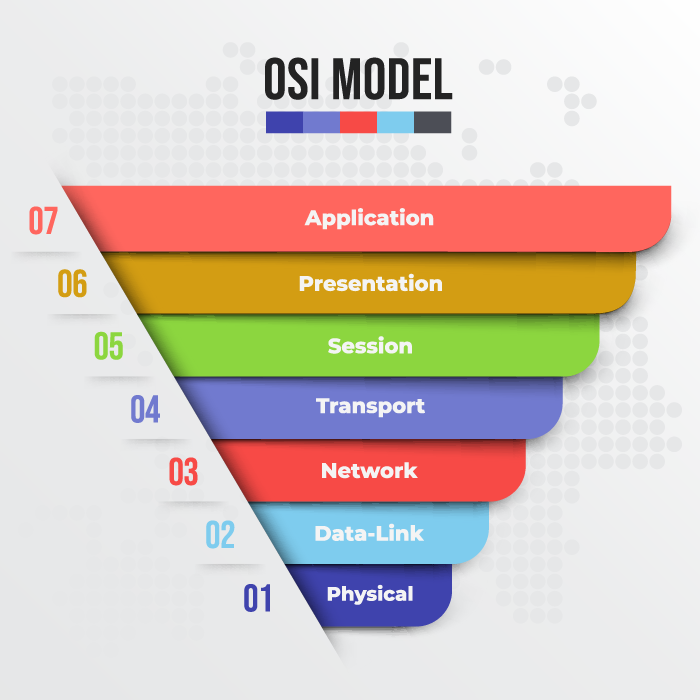
Data protocols function at the application layer, defining how data is structured, formatted, and exchanged once a network connection is established. They ensure that devices can interpret and respond to messages correctly. MQTT, CoAP, HTTP, and Modbus are common examples.
Selecting the right combination of protocols depends on your specific use case, considering factors such as power availability, required range, data volume, latency requirements, and security needs.
IoT Network Protocols
Choosing the right network technology is fundamental to any IoT deployment. Each protocol offers different trade-offs between range, power consumption, data throughput, and cost. Here's an overview of the most widely used options.
Cellular (2G/3G/4G/5G)
Cellular networks provide globally consistent connectivity with high data speeds, making them suitable for applications requiring substantial bandwidth. Modern 4G and 5G networks offer excellent coverage in urban areas and support advanced IoT applications including video streaming and real-time analytics.
Range: Global coverage where infrastructure exists
Power: High power consumption; requires mains power or frequent charging
Ideal for: Connected vehicles, mobile assets, high-bandwidth applications
Wi-Fi
Wi-Fi networks are ubiquitous in indoor environments and offer high data transfer rates suitable for bandwidth-intensive applications. The widespread availability of Wi-Fi infrastructure makes it an attractive option for smart home devices, security cameras, and multimedia streaming.
Range: 50-100 meters indoors; up to 300 meters outdoors
Power: Moderate to high; best for powered devices
Ideal for: Smart home appliances, security cameras, multimedia devices
Bluetooth / Bluetooth Low Energy (BLE)
Bluetooth is widely adopted for short-range IoT communication. Bluetooth Low Energy (BLE) significantly reduces power consumption while maintaining similar range, making it ideal for battery-operated devices like wearables, beacons, and health monitors.
Range: 10-100 meters
Power: Very low (BLE); suitable for coin-cell batteries
Ideal for: Wearables, fitness trackers, proximity beacons, medical devices
LoRaWAN
LoRaWAN is a Low-Power Wide-Area Network (LPWAN) protocol built on LoRa radio modulation. It excels in long-range, low-power scenarios where devices transmit small amounts of data infrequently. With devices capable of lasting up to 10 years on a single battery and transmission ranges up to 10 km in rural areas, LoRaWAN is particularly suited for agriculture, environmental monitoring, and smart city applications. LoRaWAN networks operate in over 160 countries, with both public and private deployment options available.
Range: 2-5 km urban; up to 10+ km rural
Power: Extremely low; 10+ year battery life possible
Ideal for: Smart agriculture, asset tracking, environmental sensors, smart meters
NB-IoT
NB-IoT (Narrowband IoT) is a cellular LPWAN technology developed by 3GPP, the standards body behind 4G and 5G. It leverages existing cellular infrastructure while offering superior indoor penetration and coverage in remote areas. NB-IoT supports 256-bit 3GPP encryption, making it suitable for security-critical applications where data integrity is paramount.
Range: Cellular network coverage; excellent indoor/underground penetration
Power: Low; designed for battery-operated devices
Ideal for: Smart metering, security systems, industrial monitoring
LTE-M
LTE-M (LTE Cat-M1) is another cellular LPWAN standard from 3GPP. Compared to NB-IoT, it offers higher data rates and lower latency, supporting voice communications and real-time applications. Both technologies work alongside 5G infrastructure, ensuring long-term viability for IoT deployments.
Range: Cellular network coverage with extended reach
Power: Low; battery operation supported
Ideal for: Real-time tracking, emergency services, voice-enabled devices
Sigfox
Sigfox is an LPWAN technology deployed across over 60 countries, operating on license-free ISM frequency bands. Like LoRaWAN, it targets long-range, low-power applications but uses an ultra-narrowband modulation scheme. The trade-off is limited bandwidth, making it unsuitable for data-intensive applications.
Range: 3-10 km urban; up to 50 km rural line-of-sight
Power: Extremely low
Ideal for: Smart alarms, retail IoT, simple sensor networks
Satellite IoT
Satellite networks provide connectivity where terrestrial infrastructure is unavailable or impractical—remote oceans, deserts, and polar regions. While traditionally expensive, new LEO satellite constellations are making satellite IoT increasingly accessible for marine applications, agricultural monitoring, and emergency response systems.
Range: Global
Power: Moderate to high
Ideal for: Maritime, remote agriculture, disaster response, oil & gas
Get Your Free IoT Guide
Explore the industrial IoT market with our free ebook. Learn about the latest tech, hardware, connectivity, and more. Discover the key use cases for 2025 and how they drive value. Get expert tips for a successful IoT strategy. Don't miss out!
IoT Data Protocols
While network protocols handle the physical transmission of data, data protocols define how information is structured and exchanged at the application layer. These protocols ensure interoperability between devices and systems, enabling meaningful communication regardless of the underlying hardware.
MQTT
Message Queuing Telemetry Transport (MQTT) was developed by IBM in 1999 for monitoring oil pipelines over satellite links. Today, it's one of the most widely adopted IoT protocols. MQTT uses a publish-subscribe architecture where devices publish messages to topics, and a central broker distributes them to subscribed clients. This decouples producers from consumers, enabling efficient asynchronous communication.
MQTT's minimal overhead—just 2 bytes for the header—makes it ideal for constrained devices and unreliable networks. It offers three Quality of Service (QoS) levels, allowing developers to balance reliability against power consumption. Built-in session management ensures messages aren't lost if connections drop temporarily.
Common applications: Smart cities, fleet management, industrial automation, remote sensor monitoring, telemedicine.
HTTP/REST
HTTP is the foundational protocol of the web, and RESTful APIs built on HTTP remain common for IoT applications requiring integration with existing web infrastructure. HTTP's widespread support, extensive tooling, and developer familiarity make it an accessible choice, particularly for cloud-connected devices with reliable power and connectivity.
However, HTTP's request-response model and relatively high overhead make it less suitable for resource-constrained devices or high-frequency data transmission.
Common applications: Cloud integration, web dashboards, device management portals.
CoAP
The Constrained Application Protocol (CoAP) (opens new window) was designed by the IETF specifically for resource-constrained IoT devices. It mirrors HTTP's RESTful semantics—using GET, POST, PUT, and DELETE methods—but runs over UDP rather than TCP, dramatically reducing overhead and power consumption.
CoAP supports content negotiation and resource discovery, allowing devices to probe each other's capabilities. Unlike MQTT's publish-subscribe model, CoAP uses request-response interactions, making it better suited for state transfer scenarios rather than event-driven streaming.
Common applications: Smart energy, building automation, constrained sensor networks.
Modbus
Developed by Modicon in 1979, Modbus is often called the "grandfather of IoT communication." It remains the de facto standard in industrial automation, connecting PLCs, sensors, and actuators in manufacturing plants, power systems, and SCADA networks. Modbus uses a simple master-slave architecture where the master polls slave devices for data.
Modbus comes in several variants: Modbus RTU (binary over serial), Modbus ASCII (human-readable), and Modbus TCP/IP (over Ethernet). Its open specification and royalty-free use have ensured decades of vendor support. However, Modbus lacks built-in security features, so modern implementations often add encryption layers when connecting to cloud platforms.
Common applications: Industrial automation, energy management, building management systems.
LwM2M
Lightweight Machine-to-Machine (LwM2M) (opens new window) is a protocol developed by the Open Mobile Alliance specifically for IoT device management. Built on CoAP, LwM2M provides standardized interfaces for device bootstrapping, configuration, firmware updates, and remote monitoring—capabilities that other protocols don't address natively.
LwM2M's object-resource model ensures interoperability across different device manufacturers. Its security features include DTLS encryption and multiple authentication modes, making it suitable for managing large fleets of devices in healthcare, utilities, and industrial settings.
Common applications: Smart metering, cellular IoT device management, healthcare devices, asset tracking.
OPC UA
OPC Unified Architecture (OPC UA) (opens new window) is a platform-independent standard developed by the OPC Foundation for industrial interoperability. It evolved from the Windows-only OPC Classic to become a cornerstone of Industry 4.0 and Industrial IoT initiatives. OPC UA provides not just data exchange but also rich semantic modeling, allowing machines to understand the meaning and context of transmitted data.
Security is integral to OPC UA, with built-in authentication, authorization, and encryption. The protocol supports both client-server and publish-subscribe patterns, and companion specifications define standardized data models for over 60 types of industrial equipment.
Common applications: Manufacturing automation, process control, MES/ERP integration, smart factories.
Conclusion
Selecting IoT communication protocols requires careful consideration of your deployment's specific requirements. Network protocol choice depends primarily on range, power budget, and data volume. Data protocol selection should consider device constraints, integration requirements, and whether you need event-driven messaging or device management capabilities.
In practice, many IoT solutions combine multiple protocols—for example, using LoRaWAN for field sensors, MQTT for cloud integration, and LwM2M for device management. Understanding each protocol's strengths enables you to architect solutions that are efficient, scalable, and maintainable.
AI and IoT insights to help you transform your business




Copyright © Davra Networks 2026. All rights reserved.
Cookie & Privacy Policy